As the number of self-proclaimed “foodies” rises across the nation, so do the ways in which we purchase our food. Pop-up restaurants, carts on the street, casual bistros, and food trucks most of all have taken away from traditional restaurant openings. Food trucks have been around for over a decade, but in the past few years the concept has skyrocketed throughout cities across the U.S.
Chicago is the most recent city to welcome the concept of mobile food, following in the footsteps of San Francisco, New York, Portland, New Orleans, and Austin. However, it has not been a smooth transition for those trying to emerge in the new market. With a strict set of zoning and hours of operation regulations, many up-and-coming businesses have had to jump through hoops in order to keep their company on wheels functional while turning a profit.
The Fat Shallot is one of those very businesses. Fronted by Chicago-raised husband and wife duo Sam Barron and Sarah Weitz, the two have followed their passion for all things culinary to success. After spending years working for prestigious restaurants and traveling around farmlands throughout Europe and Asia, Barron and Weitz decided to return home to Chicago in order to share their experiences on their own terms.
“We had been cooking in restaurants for about 10 years,” Barron said. “Terrible hours, terrible money… We thought the time was right to strike out and be our own bosses.”
What The Fat Shallot stands for
At the heart of it, The Fat Shallot is not trying to do anything too fancy or crazy. Barron and Weitz are adding fun twists to their food by taking classic flavors like buffalo chicken wings, celery, and bleu cheese, combining all of the components of the experience into a sandwich. Here, they really aspire to let classic flavors shine.
“[Chicago’s] kind of missing the street food culture,” Barron said. “You don’t have hot dog stands like you do in New York. It’s an unsaturated market. We thought we would really make our mark.”
After working in restaurants for a prolonged period of time, Barron admits he is not striving to go back any time soon. He is, however, keen on thinking of another food truck concept before returning to the formal world of cooking.
Driving around obstacles
Being the bosses of the business have not simplified all aspects of working. Competition between food trucks in Chicago is fierce due to boundary and zoning restrictions.
“In the legal zones, there can be about 8 trucks in the downtown area and 80 trucks trying to serve lunch,” Barron said. “Getting a spot each day is kind of the biggest daily headache.”
Even waking up at 4 a.m. in order to get a spot does not guarantee a truck will be doing business that day. Add all of that on top of regular restaurant issues like incorrect food deliveries and keeping an engine functional along with propane tanks. Food trucks are not for the faint of heart. And this is all before winter.
“We kind of side stepped [winter] the past two years,” Barron said. “This year I think we will just try to bare it out… Lots of space heaters, lots of layers, and working the menu to where food won’t get freezing cold.”
The employees at The Fat Shallot make it visibly clear that the enjoyment of serving food all around the city is worth the extra work, and so do their dedicated regulars.
“It takes a lot of love… a lot of extra prep,” employee Jacob Hatfield said. “[We] spend the extra hours just to make that sandwich a little bit better and [the customers] keep coming in groves, so I can’t complain.”
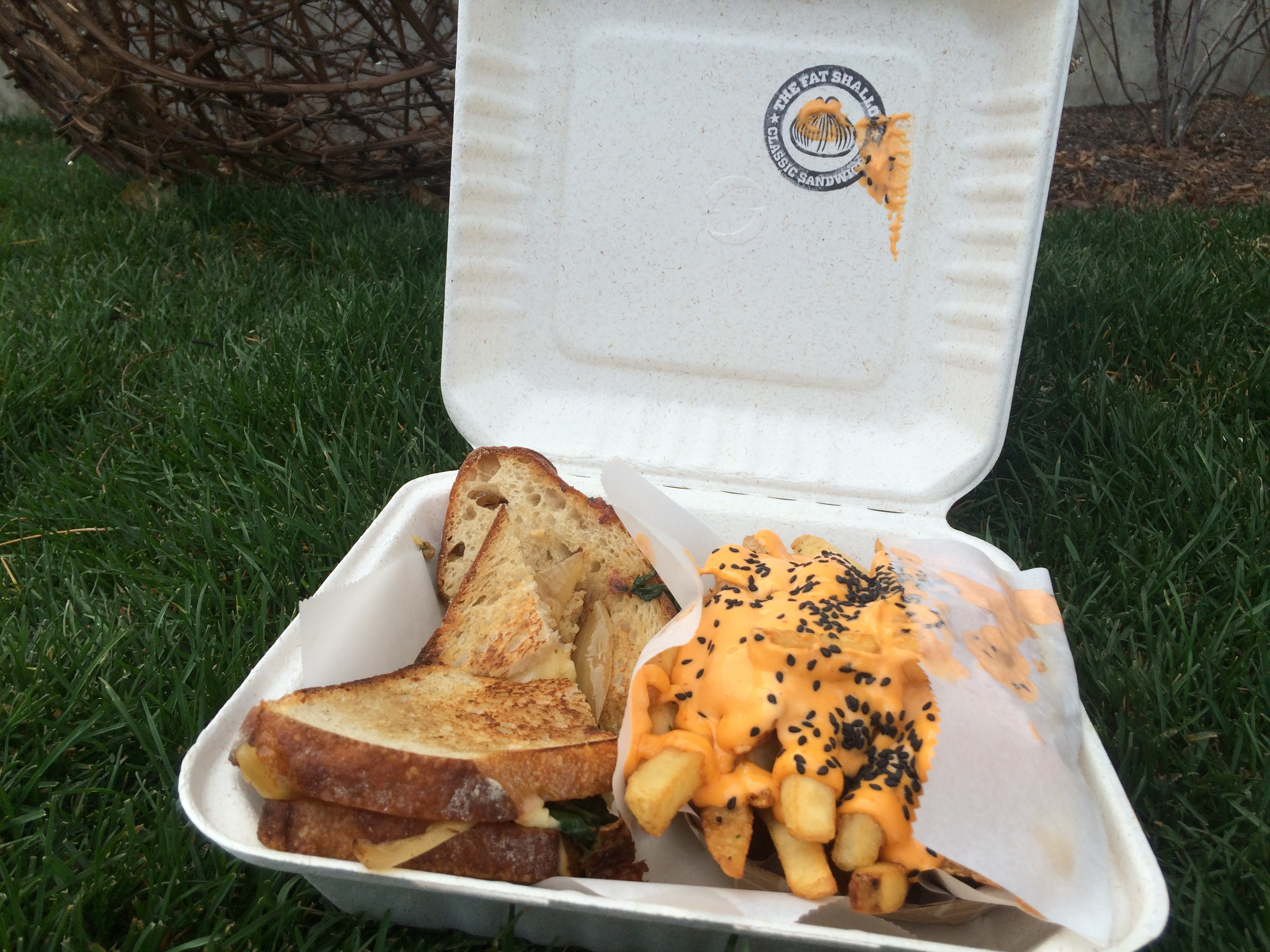
After having their take on a grilled cheese stuffed with caramelized onions and spinach, neither can I.

- Locals await The Fat Shallot’s weekly stop in Chicago’s Loop area. photo by Tyler Holmes
 J. Tyler Holmes
Leave a comment